09 Jun 2026
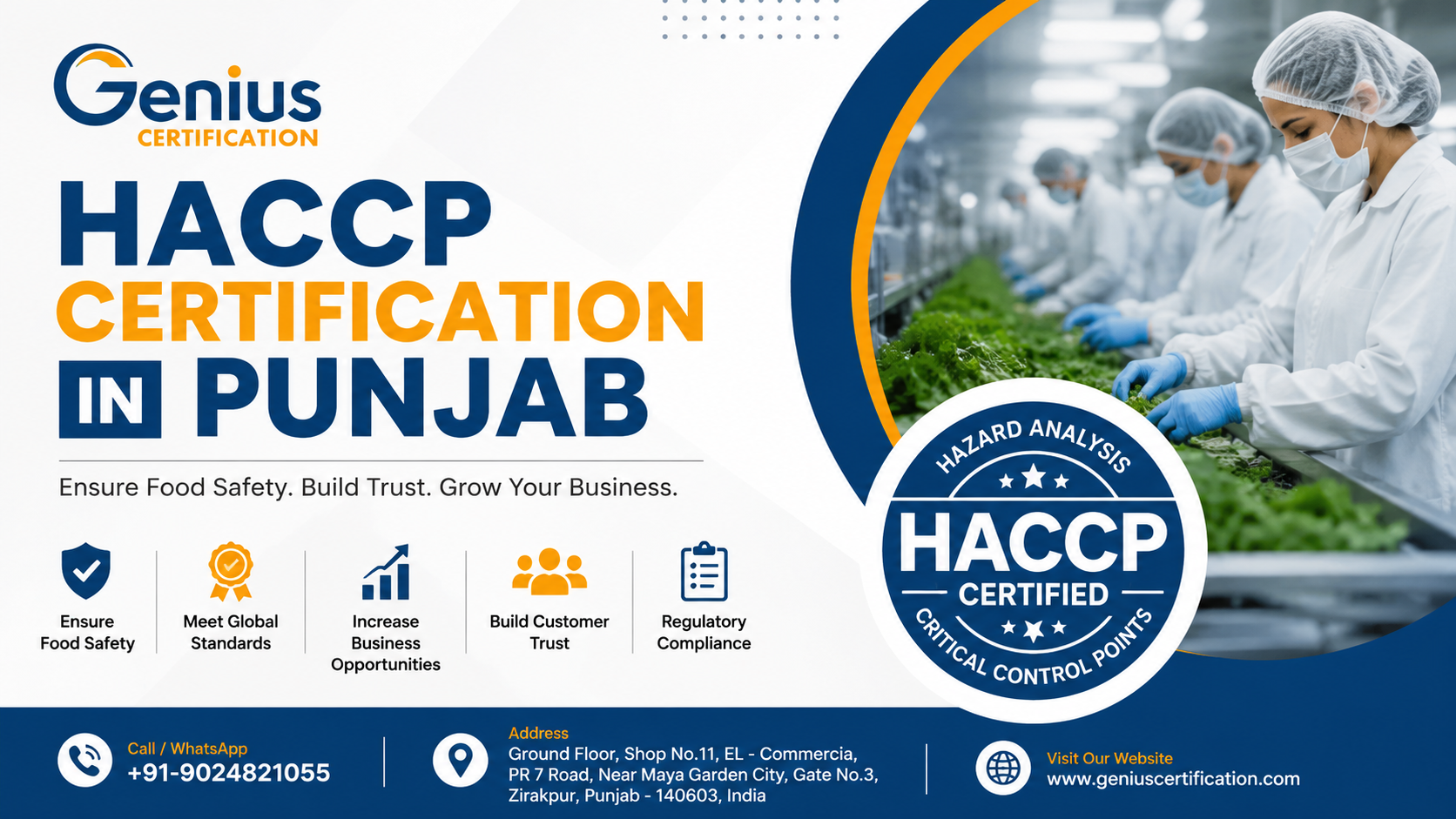
In today's competitive food industry, maintaining food safety is no longer optional—it is a necessity. Consumers, regulatory authorities, distributors, retailers, and international buyers expect food products to be safe, hygienic, and compliant with recognized standards. This is why HACCP Certification in Punjab 2026 has become increasingly important for food manufacturers, dairy units, restaurants, hotels, food processing companies, exporters, and catering businesses.
Punjab is one of India's leading agricultural and food-producing states. The state is known for its dairy products, packaged foods, grains, beverages, spices, frozen foods, and food exports. As the food industry continues to grow, businesses need robust food safety systems to ensure compliance and maintain customer trust.
HACCP Certification (Hazard Analysis and Critical Control Points) is an internationally recognized food safety management system designed to identify, assess, and control food safety hazards before they affect consumers. It helps businesses establish preventive measures rather than relying solely on product testing after production.
Whether you own a food manufacturing unit in Ludhiana, a dairy plant in Mohali, a restaurant in Amritsar, or an export company in Jalandhar, obtaining HACCP certification can strengthen your brand reputation and open new business opportunities.
HACCP stands for Hazard Analysis and Critical Control Points. It is a systematic and preventive approach to food safety management that identifies potential biological, chemical, and physical hazards during food production and implements controls to eliminate or minimize these risks.
The HACCP system was originally developed to ensure food safety for space missions and is now recognized globally as one of the most effective food safety frameworks.
The certification demonstrates that an organization has established a structured process to:
Today, HACCP certification is widely accepted by food manufacturers, retailers, regulatory agencies, and international buyers worldwide.
Punjab has a thriving food sector that includes:
With increasing consumer awareness and stricter food safety regulations, organizations must demonstrate their commitment to food quality and safety.
HACCP focuses on preventing hazards rather than reacting to problems after they occur. This proactive approach significantly improves food safety.
Consumers prefer purchasing products from businesses that follow internationally recognized food safety standards.
A HACCP-certified organization is viewed as reliable, professional, and quality-focused.
HACCP helps organizations comply with food safety regulations and industry requirements.
By identifying risks early, businesses can minimize costly product recalls and food contamination incidents.
Many international buyers require HACCP certification before sourcing food products from suppliers.
HACCP implementation streamlines processes, reduces waste, and improves productivity.
Certified organizations gain a stronger position in local and global markets.
HACCP certification is beneficial for any business involved in the food supply chain.
Food manufacturing companies use HACCP to maintain product quality and meet customer expectations.
Punjab's dairy industry can improve hygiene and food safety through HACCP implementation.
Restaurants and hotels can strengthen customer trust by ensuring safe food preparation and handling.
Food processing facilities use HACCP to identify critical risks and maintain compliance.
Export businesses often require HACCP certification to access international markets.
Catering providers can demonstrate food safety commitment through certification.
Beverage companies can improve production safety and quality management.
Storage facilities can ensure safe handling and preservation of food products.
HACCP is based on seven internationally recognized principles:
Identify potential food safety hazards that could occur during production.
Identify stages where risks can be controlled effectively.
Define acceptable limits for each critical control point.
Create systems to monitor food safety performance.
Define actions to take when critical limits are exceeded.
Verify that the HACCP system is functioning correctly.
Maintain records to demonstrate compliance and traceability.
Obtaining HACCP certification involves several structured steps.
Businesses consult HACCP experts to understand requirements and certification scope.
A detailed review identifies areas requiring improvement.
Food safety manuals, procedures, policies, and records are prepared.
Critical hazards and control measures are identified.
Staff members are trained on HACCP procedures and food safety practices.
The organization conducts an internal audit to assess readiness.
An independent certification body performs an external audit.
Upon successful completion, the HACCP certificate is issued.
One of the most common questions businesses ask is:
The cost depends on several factors:
Small food businesses typically have lower certification costs compared to large manufacturing facilities.
For an accurate quotation, businesses should consult professional HACCP certification consultants.
Food manufacturers face increasing pressure from regulators, retailers, and consumers.
Benefits include:
Restaurants and hospitality businesses can use HACCP to:
For hotels and restaurants in Chandigarh, Mohali, Amritsar, Ludhiana, and Patiala, HACCP certification provides a significant competitive advantage.
Food exporters in Punjab can benefit through:
Genius Certification provides complete support for businesses seeking HACCP certification.
Our services include:
Our experienced consultants help organizations achieve certification efficiently and cost-effectively.
HACCP Certification is a globally recognized food safety certification that helps organizations identify and control food safety hazards.
While not always legally mandatory, many buyers, retailers, exporters, and regulatory bodies prefer HACCP-certified businesses.
The certification process generally takes a few weeks to a few months depending on the organization's preparedness.
Food safety policies, HACCP plans, process flow charts, monitoring records, training records, and operational procedures are commonly required.
The certification is generally valid for a specified period and requires periodic surveillance audits for continued compliance.
Ready to obtain HACCP Certification in Punjab and strengthen your food safety management system?
📞 Phone: +91-9024821055
📞 WhatsApp Chat: +91-9024821055
📍 Address:
Ground Floor, Shop No.11, EL-Commercia, PR 7 Road, Near Maya Garden City, Gate No.3, Zirakpur, Punjab - 140603, India
Our experts help food manufacturers, restaurants, hotels, exporters, dairy units, and food processing companies achieve HACCP certification smoothly and efficiently.
As food safety regulations become more stringent and customer expectations continue to rise, HACCP Certification in Punjab 2026 has become an essential requirement for businesses operating in the food industry. It not only improves food safety and operational efficiency but also enhances customer trust, regulatory compliance, and market opportunities.
Whether you are a food manufacturer, restaurant owner, exporter, dairy processor, or catering service provider, implementing HACCP can help your organization achieve long-term growth and credibility.
Contact Genius Certification today at +91-9024821055 and take the first step toward internationally recognized food safety excellence.
ISO Stands for Genius Certification. ISO is an independent, non-governmental international organization with a membership of 162 national standard bodies.
+91-9024821055 Enquiry Now